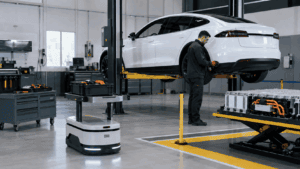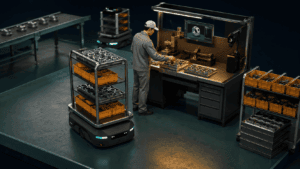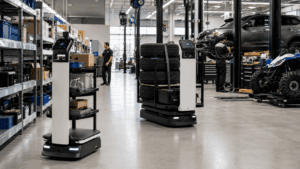
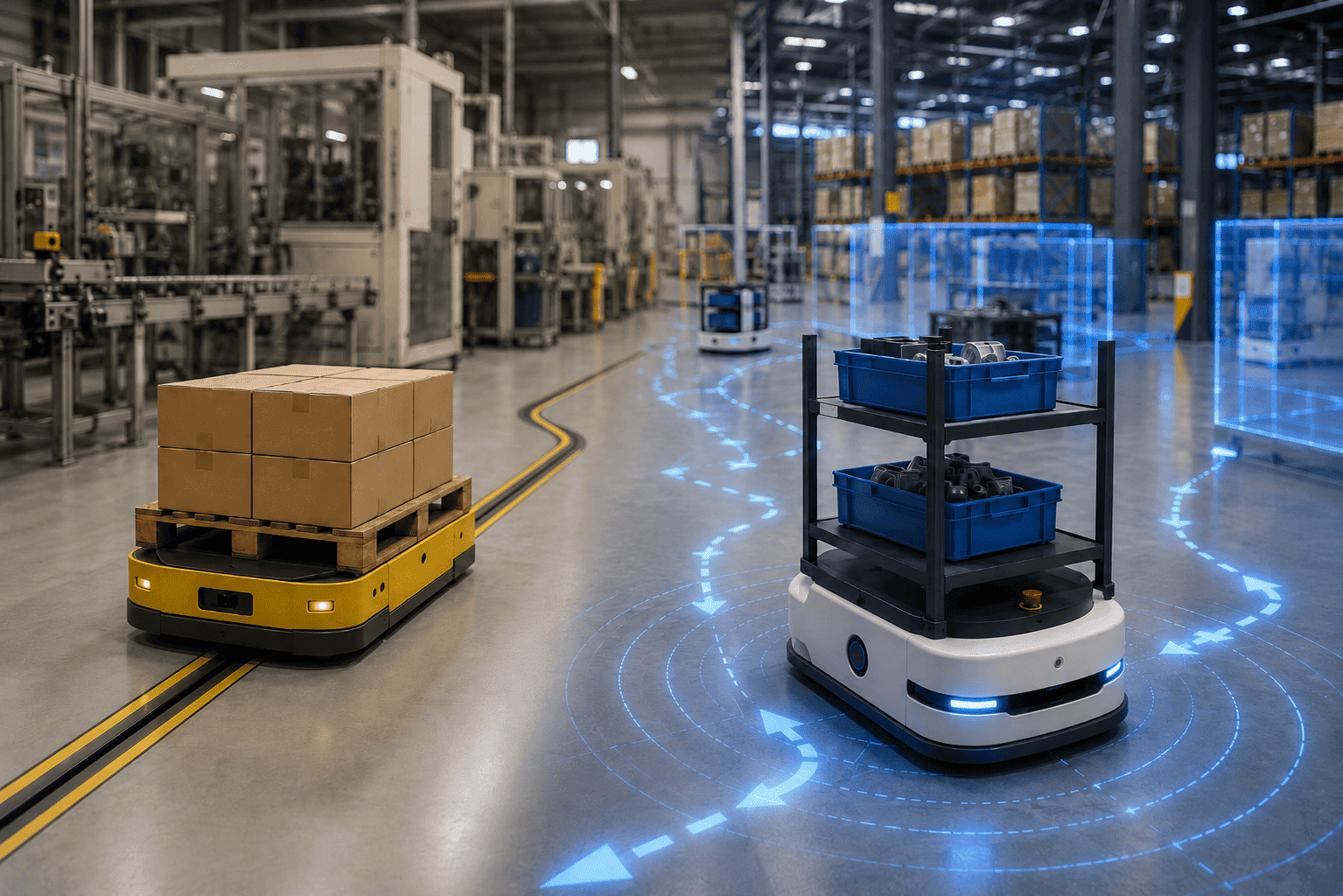
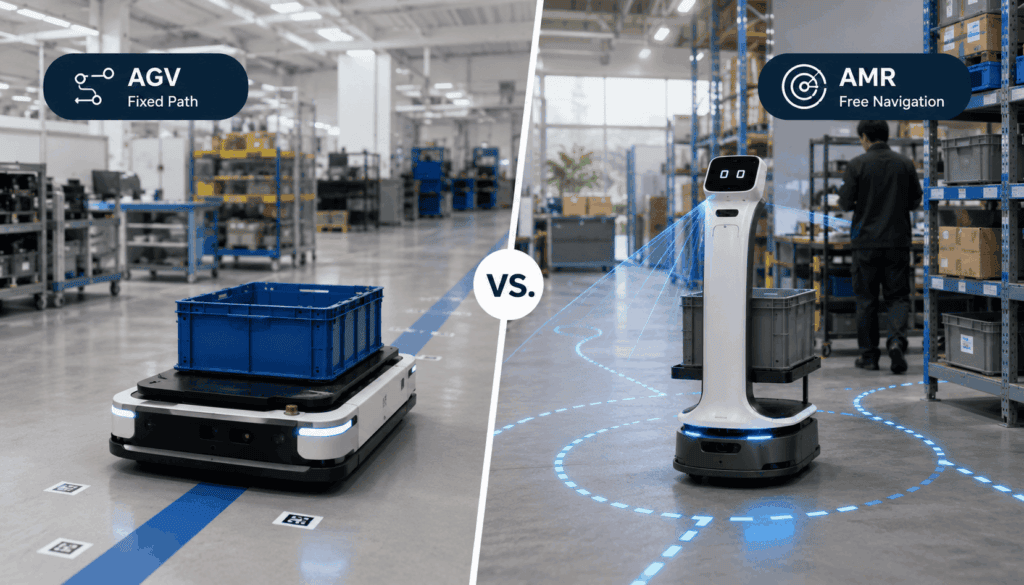
AGV vs. AMR comes down to one main difference: an AGV follows a fixed path, while an AMR can navigate on its own using sensors, maps, and software. For shops, warehouses, parts departments, and service operations, AGVs work best for simple repeated routes, while AMRs are usually better for busy, changing spaces where people, materials, and priorities move throughout the day. This guide explains the difference between AGV and AMR robots, when to choose each one, and why AMRs are becoming a flexible choice for modern material handling.
Simple Guide for Shop Owners
Moving parts, tools, tires, bins, or materials around your shop takes time. It also pulls your team away from more important work. That is why many businesses are looking at automation.
Two common options are AGVs and AMRs.
They may sound similar, but they work very differently. Choosing the right one depends on how your shop operates.
What Is an AGV?
AGV stands for Automated Guided Vehicle.
An AGV is a driverless vehicle that follows a fixed path. Think of it like a train inside your shop or warehouse. It moves from one point to another using a path that has already been set up.
That path may use:
- Magnetic tape
- Floor markers
- Wires
- Reflectors
- QR codes
- Rails or tracks
AGVs are useful when the job is always the same. For example, if a vehicle needs to move materials from one station to another all day, and the route never changes, an AGV can be a good fit.
The downside is that AGVs are not very flexible. If something blocks the path, the AGV usually stops and waits. If you want to change the route, you may need to change the floor setup.
What Is an AMR?
AMR stands for Autonomous Mobile Robot.
An AMR is a smarter mobile robot. Instead of following a fixed track, it uses sensors, cameras, maps, and software to understand the space around it.
An AMR can:
- Map your shop or warehouse
- Plan its own route
- Move around people or obstacles
- Adjust when the layout changes
- Be reassigned to different jobs
In simple terms, an AMR works more like a trained helper. You tell it where to go, and it figures out the best way to get there.
This makes AMRs a strong option for busy shops, warehouses, service departments, and parts operations where people, products, and priorities change throughout the day.
AGV vs. AMR: Simple Comparison
| Factor | AGV | AMR |
| How it moves | Follows a fixed path | Finds its own route using sensors and maps |
| Best for | Repeated routes that rarely change | Changing workflows and busy spaces |
| Obstacle handling | Stops when blocked | Can slow down, stop, or move around obstacles |
| Setup | May require tape, markers, wires, or floor changes | Usually starts with mapping and software setup |
| Flexibility Scaling |
Lower May require more route planning |
Higher Easier to add more robots and update routes |
| Maintenance | Focuses more on the path system and vehicle | Focuses more on sensors, software, wheels, batteries, and maps |
When Does an AGV Make Sense?
An AGV may be a good choice if your shop has a very stable process.
For example:
- The pickup point is always the same
- The drop-off point is always the same
- The route does not change
- The floor layout is fixed
- There is very little traffic in the area
AGVs can work well in factories, assembly lines, or controlled material-moving routes.
If your operation is simple, repetitive, and does not change often, an AGV may be enough.
When Does an AMR Make Sense?
An AMR is usually a better choice when your shop is active and changing.
For example:
- Workers move through the same aisles
- Parts and materials are stored in different locations
- Priorities change during the day
- The layout may change over time
- You want to add more robots later
- You want less floor modification during setup
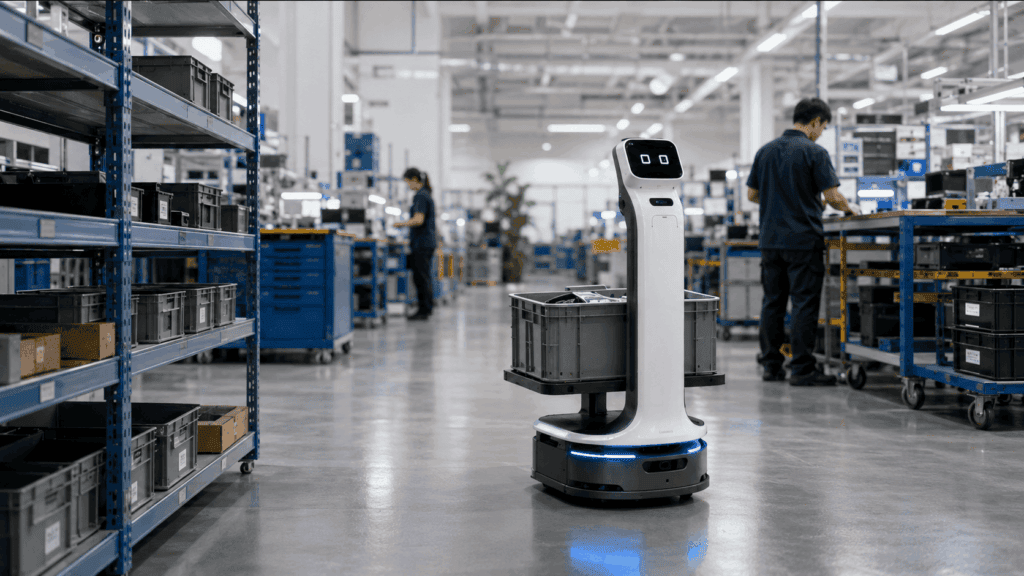
AMRs are especially helpful in shops and warehouses where flexibility matters.
Instead of building your operation around the robot’s fixed path, the AMR can adapt to your operation.
Why AMRs Are Becoming Popular
Many shop owners do not want a large construction project just to add automation.
That is one reason AMRs are gaining attention.
An AMR does not usually need magnetic tape, tracks, or major floor changes. It can be introduced into an existing workplace with mapping, software setup, and proper safety planning.
This can make AMRs easier to adopt for businesses that want to improve productivity without completely changing their facility.
How AMRs Help Your Team
AMRs are not designed to replace your skilled workers. They are designed to take over the repetitive walking, carrying, and material-moving tasks that slow your team down.
An AMR can help move:
- Parts
- Tools
- Tires
- Bins
- Supplies
- Small pallets
- Shop materials
- Warehouse inventory
This allows your employees to spend more time on higher-value work, such as service, repair, customer support, picking accuracy, quality control, and order fulfillment.
Safety Around Workers
A properly planned AMR system can work safely around people.
AMRs use sensors and safety systems to detect what is around them. If a person steps into the path, the robot can slow down, stop, or choose another route depending on the situation and setup.
Safety still needs to be planned correctly. A good automation project should consider aisle width, traffic flow, speed, load size, stopping distance, staff training, and the type of work being done in the area.
Which One Should You Choose?
The simple answer is this:
Choose an AGV if your route is fixed, your process is stable, and your layout rarely changes.
Choose an AMR if your shop needs flexibility, your layout changes, your team shares the same space, or your workload changes during the day.
For many modern shops, warehouses, and service operations, AMRs are often the more flexible choice.
Final Thoughts
Automation does not have to start with a huge project.
For many shop owners, the best first step is to look at where employees spend too much time walking, carrying, waiting, or moving materials. Those are often the areas where an AMR can make an immediate difference.
At ShopProBot, we help businesses understand how mobile robots can support real-world operations. Whether you are moving parts, supplies, bins, or materials, the right robot can help your team work faster, safer, and more efficiently.
FAQ
What is the biggest difference between AGV and AMR?
An AGV follows a fixed path. An AMR can plan its own route using sensors, maps, and software.
Does an AMR need tracks on the floor?
No. AMRs usually do not need tracks, wires, or magnetic tape. They use mapping and onboard sensors to move through the facility.
Is an AMR better than an AGV?
Not always. AGVs are good for fixed, repeated routes. AMRs are better when the work area changes or when people and obstacles are present.
Can AMRs work around employees?
Yes, when properly planned and installed. AMRs use safety sensors and software to detect people and objects.
Are AMRs only for large warehouses?
No. AMRs can also be useful in service shops, parts departments, distribution areas, manufacturing spaces, and other businesses that move materials throughout the day.
How do I know if my shop is ready for an AMR?
Start by asking where your team spends the most time walking, carrying, or moving items. If those tasks happen every day, your shop may be ready for automation.