Many businesses want to improve productivity, but they are still using employees to walk back and forth all day to move parts, tools, supplies, bins, packages, inventory, or equipment.
These trips may seem small, but they add up. Every minute spent walking, waiting, pushing carts, or searching for materials is time your team could spend on higher-value work.
Autonomous Mobile Robots, also called AMRs, can help businesses move materials more efficiently. They are designed to support daily operations by handling repetitive transportation tasks inside shops, warehouses, factories, service departments, hospitals, hotels, restaurants, retail stores, and other work environments.
This guide explains what AMRs are, where they are used, how they help businesses, and what to consider before choosing an AMR solution.
What Is an Autonomous Mobile Robot?
An Autonomous Mobile Robot is a smart mobile robot that can move through a workspace without needing fixed tracks, floor tape, or constant human control.
AMRs use sensors, cameras, mapping software, and navigation technology to understand the space around them. They can move from one location to another, detect people or objects, and adjust their route when needed.
In simple terms, an AMR is a robot helper that moves things around your business so your team can spend less time walking and more time working.
Why Businesses Are Considering AMRs
Businesses are looking at AMRs because many daily operations still depend on manual material movement. Employees often spend time moving items between storage areas, workstations, service bays, production lines, packing areas, and shipping zones.
AMRs help solve this problem by reducing repetitive walking and transportation tasks. They can help businesses improve workflow, use labor more effectively, and keep materials moving throughout the day.
Common reasons businesses consider AMRs include:
-
- Reducing unnecessary walking and manual transport
-
- Helping employees focus on skilled or customer-facing work
-
- Moving materials more consistently throughout the day
-
- Supporting labor shortages or limited staffing
-
- Improving workflow between departments or work areas
-
- Adding automation without completely redesigning the facility
-
- Creating a more flexible operation that can grow over time
What Tasks Can AMRs Help With?
AMRs are useful because they can support many different movement-based tasks. The exact job depends on the robot type, payload size, facility layout, and business need.
Common AMR tasks include:
-
- Moving parts from storage to work areas
-
- Delivering tools, bins, supplies, or materials
-
- Transporting small pallets or carts
-
- Supporting picking, packing, sorting, and replenishment
-
- Moving inventory between storage, production, and shipping areas
-
- Helping service departments move parts, tires, or shop materials
-
- Delivering food, linens, medical supplies, or customer items
-
- Supporting cleaning, facility maintenance, or routine service tasks
The main value is simple: AMRs help move the right item to the right place at the right time with less manual effort.
Where AMRs Are Used
AMRs can support many industries because they are flexible and mobile. They are especially helpful in environments where people, products, and priorities change throughout the day.
1. Shops and Service Departments
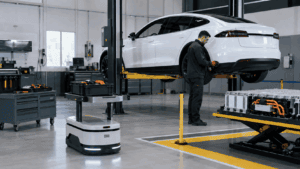
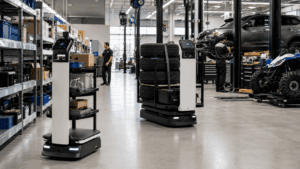
In auto shops, motorcycle shops, parts departments, and service operations, AMRs can help move parts, tools, tires, bins, and supplies between storage areas, service bays, and workstations. This helps technicians and employees stay focused on repair, service, and customer support.
2. Warehouses and Fulfillment Centers
In warehouses, AMRs can move products, packages, bins, and materials between storage, picking, packing, and shipping areas. This can reduce walking time and help employees complete orders more efficiently.
3. Manufacturing Facilities
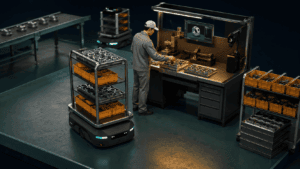
In manufacturing, AMRs can move raw materials, work-in-progress items, tools, components, and finished products between production areas. This helps reduce delays and keeps work moving through the facility.
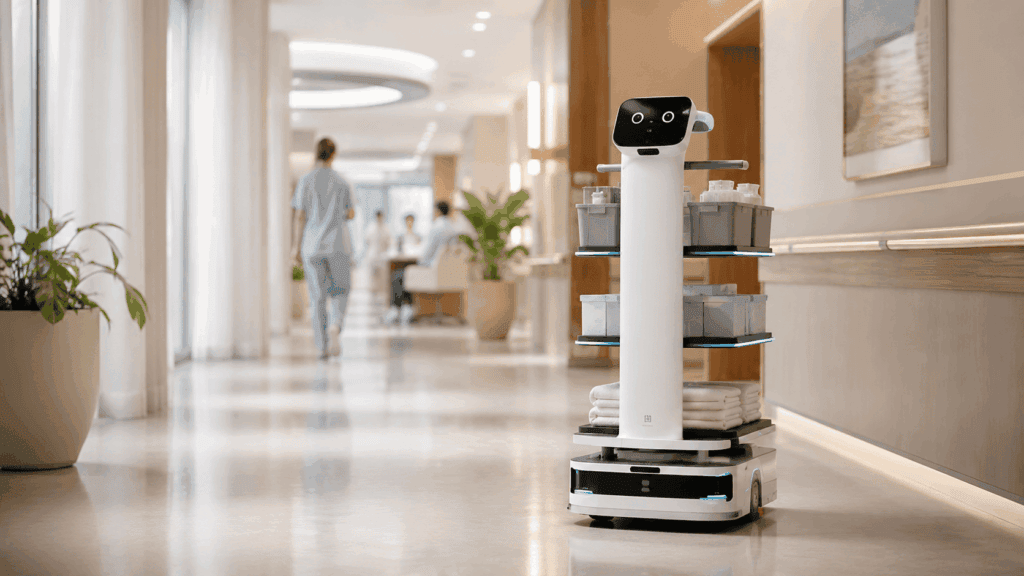
4. Healthcare Facilities
Hospitals and healthcare facilities can use AMRs to deliver medical supplies, lab samples, medicine, equipment, linens, and other important items. This can reduce routine delivery work for nurses and staff.
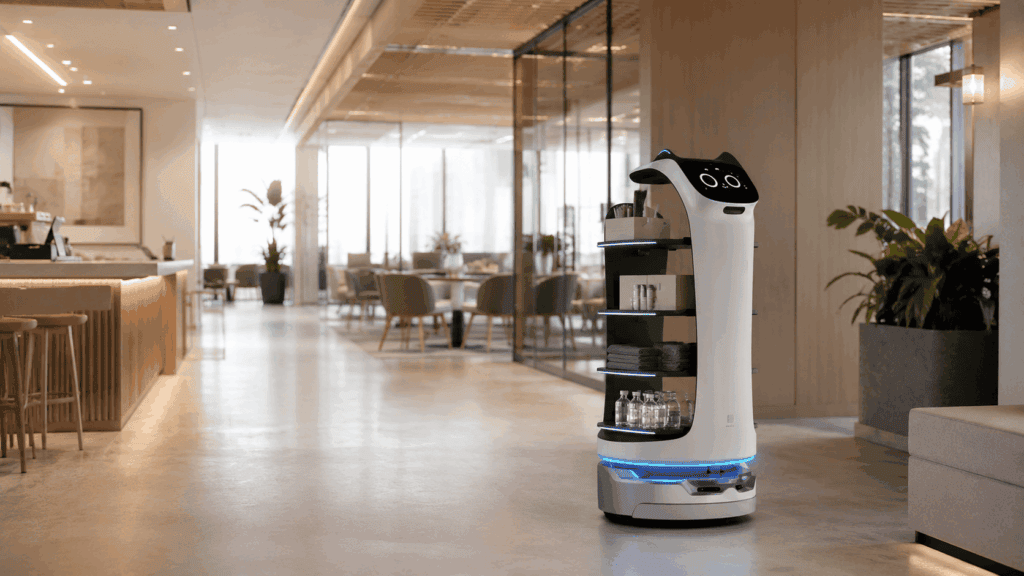
5. Retail, Hotels, and Restaurants
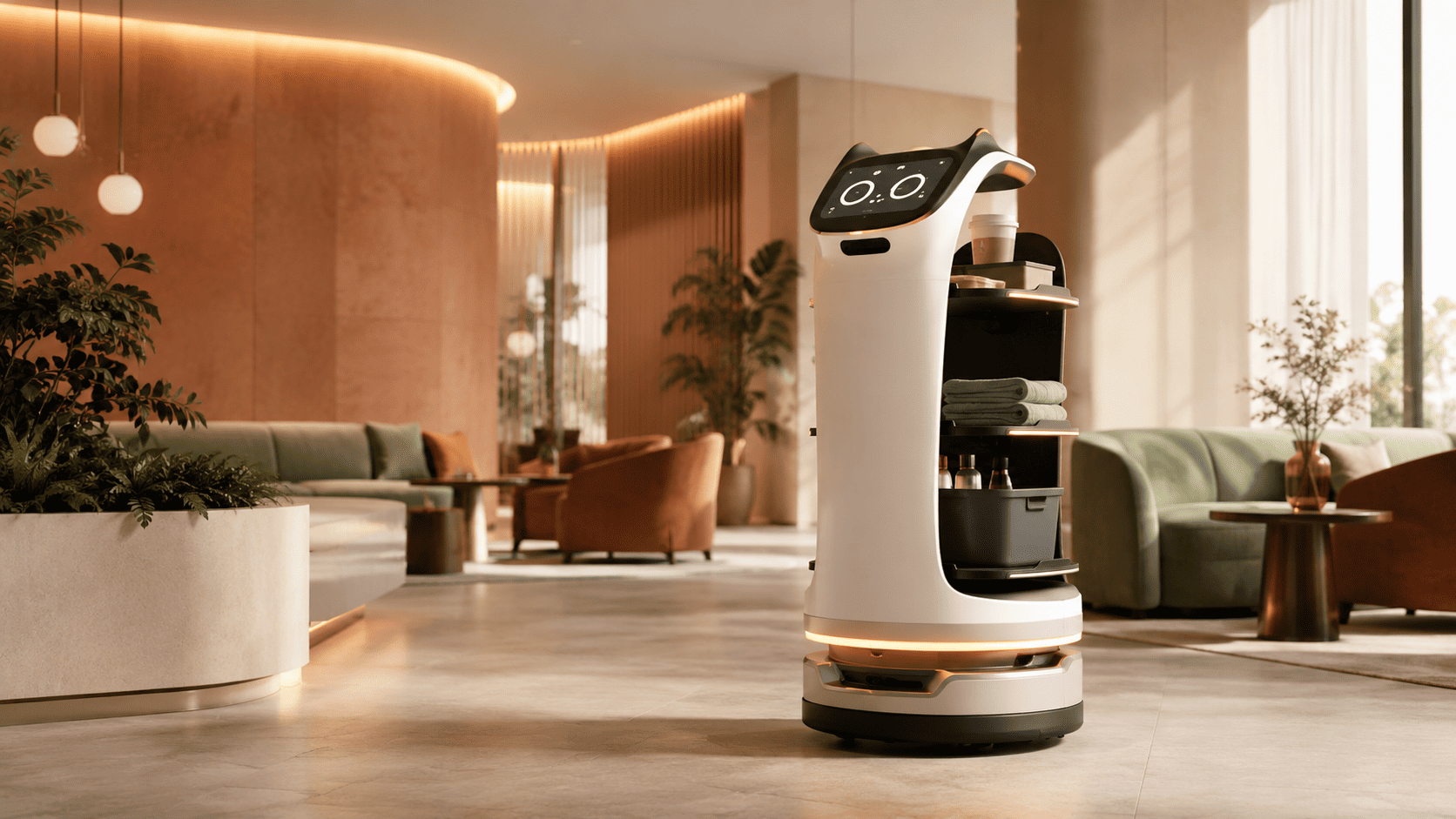
Retail stores, hotels, and restaurants can use service robots for stock movement, delivery, room service, cleaning support, and customer-facing service tasks. These robots can support staff during busy hours and improve service consistency.
6. Cleaning and Facility Support
Some AMRs are designed for floor cleaning, facility maintenance, inspection, or routine support tasks. They can help businesses keep spaces clean, organized, and operational with less manual labor.
How AMRs Work in Simple Terms
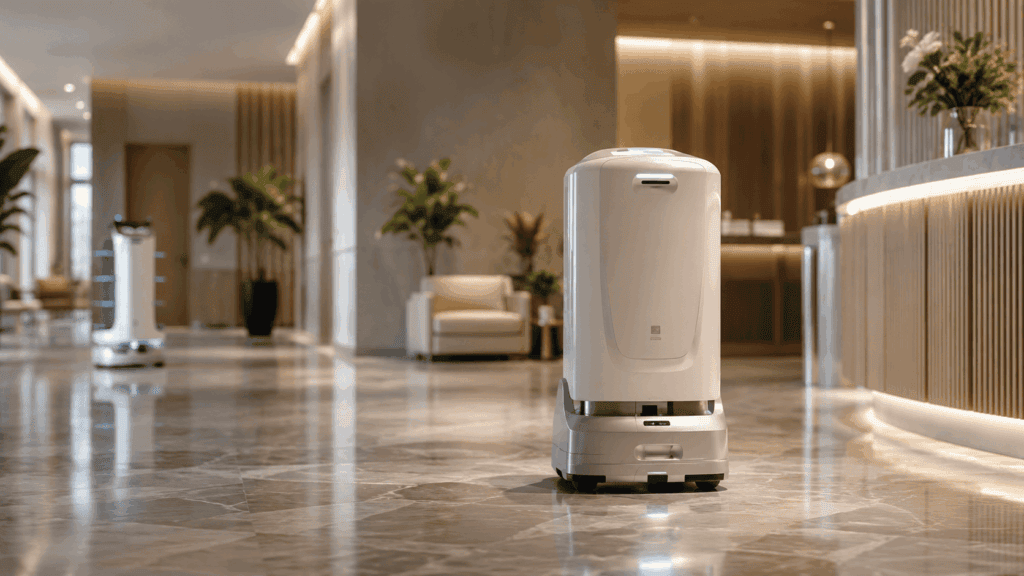
AMRs use a combination of hardware and software to move safely and complete tasks. The technology may sound complex, but the basic idea is easy to understand.
The robot needs to see the space, understand where it is, know where it needs to go, and move safely around people and objects.
Common AMR technologies include:
-
- LiDAR sensors to scan the environment and measure distance
-
- Cameras to detect people, objects, aisles, signs, and movement
-
- Ultrasonic or distance sensors to detect nearby obstacles
-
- Mapping software to create a digital map of the facility
-
- Navigation software to plan routes and avoid obstacles
-
- Fleet management software to assign tasks and coordinate multiple robots
-
- Wireless connectivity so the robot can receive tasks, send updates, and connect with other systems
For example, if a cart, pallet, person, or box blocks the robot’s path, the AMR can slow down, stop, or find another route depending on the robot, safety setup, and work environment.
Business Benefits of AMRs
1. Less Time Spent Walking
Employees often lose time walking across a facility to pick up or drop off items. AMRs can help reduce those trips so employees can stay closer to their main work area.
2. Better Use of Labor
AMRs are not meant to replace skilled employees. They are meant to support employees by taking over simple, repetitive movement tasks.
3. More Consistent Material Flow
AMRs can help keep materials moving on a more consistent schedule. This can reduce waiting time, production delays, and workflow interruptions.
4. Flexible Automation
Because AMRs do not usually require fixed tracks or floor tape, they can be easier to adjust when the facility layout or workflow changes.
5. Scalable Growth
As business volume increases, more robots can often be added to support the workload. This allows companies to start small and grow over time.
6. Operational Visibility
Many AMR systems can collect data such as travel time, task completion, waiting time, route patterns, and charging status. This information can help managers find bottlenecks and improve workflows.
7. Safer Material Movement Planning
AMRs use sensors and safety systems to detect people and objects. With proper planning, training, and traffic rules, they can support safer movement in shared workspaces.
Common Types of AMR Solutions
Different AMRs are designed for different tasks. Choosing the right design depends on what the robot needs to carry, where it needs to travel, and how it will fit into the operation.
1. Cart Robots
Cart robots are used to move bins, parts, supplies, packages, or small to medium-sized loads. They are common in warehouses, shops, fulfillment centers, and manufacturing facilities.
2. Tugger Robots
Tugger robots pull carts or trailers and are useful for moving heavier loads over longer distances inside a facility.
3. Shelf and Picking Robots
Shelf and picking robots help move inventory, shelves, or items to workers for picking, sorting, packing, or fulfillment.
4. Service and Delivery Robots
Service robots can deliver food, drinks, linens, medical supplies, documents, or customer items in restaurants, hotels, hospitals, offices, and public spaces.
5. Cleaning Robots
Cleaning AMRs help with floor cleaning and facility maintenance. They are useful in warehouses, retail stores, schools, hospitals, hotels, and commercial buildings.
6. Inspection or Security Robots
Some mobile robots are used for patrol, inspection, monitoring, or facility support tasks. These robots can help businesses improve visibility and routine checking.
How to Know If Your Business Is Ready for AMRs
A business may be ready for AMR automation if employees spend too much time moving items manually or if material movement causes delays in the workflow.
Start by looking for repeated movement tasks. These are often the best places to begin.
Ask these questions:
-
- Where do employees spend the most time walking?
-
- Which materials need to move every day?
-
- Are employees leaving workstations to pick up parts, tools, or supplies?
-
- Are there delays because items are not delivered on time?
-
- Are carts, bins, or materials frequently moved between the same areas?
-
- Are labor shortages affecting productivity?
-
- Does the layout change often?
-
- Do you want automation that can grow with the business?
If several answers point to repeated movement, delays, or wasted walking time, AMRs may be worth exploring.
Planning Questions Before Choosing an AMR
Before choosing an AMR solution, businesses should clearly understand the job they want the robot to perform. This helps avoid choosing a robot that is too small, too large, too limited, or not suited for the environment.
Important planning questions include:
-
- What items will the robot move?
-
- How heavy are the items?
-
- How large are the items?
-
- How far does the robot need to travel?
-
- How often will the task happen?
-
- Will the robot work around people, forklifts, carts, or customers?
-
- How wide are the aisles and turning areas?
-
- Does the robot need to use elevators, doors, or charging stations?
-
- Does the robot need to connect with warehouse, inventory, or production software?
Who will maintain and support the robot after installation?
Common Customer Concerns About AMRs
Will the robot be difficult to install?
Will the robot work safely around employees?
Will employees accept the robot?
Will the robot connect with existing systems?
How do we measure return on investment?
How ShopProBot Helps Businesses Explore AMR Solutions
ShopProBot helps businesses understand practical robot solutions for real-world operations. The goal is to make automation easier to understand, easier to choose, and easier to adopt.
Depending on the business need, AMR solutions may support material handling, delivery, cleaning, warehouse movement, service tasks, or industrial automation.
ShopProBot can help businesses think through important questions such as:
-
- What task should the robot perform?
-
- What type of robot design fits the task?
-
- What load size and weight are required?
-
- How will the robot move through the facility?
-
- Will it work near employees, customers, forklifts, or carts?
-
- What safety planning is needed?
-
- Does the robot need software or system integration?
-
- What support and maintenance will be needed after deployment?
With the right AMR solution, businesses can reduce repetitive movement, improve efficiency, support employees, and create a smarter operation.
Conclusion: AMRs Help Businesses Move Smarter
Autonomous Mobile Robots give businesses a flexible way to move products, materials, tools, supplies, and equipment.
AMRs can help reduce repetitive manual work, improve workflow, support employees, and make daily operations more efficient. They are useful in shops, warehouses, factories, healthcare facilities, retail stores, restaurants, hotels, and many other environments.
The best AMR project starts with a simple question: where is your team losing time moving things manually?
Once that problem is clear, the right robot solution can help your business move smarter, work faster, and prepare for future growth.
Ready to Explore AMR Solutions?
ShopProBot helps businesses find practical, scalable robot solutions for real-world operations. Whether you need a cleaning for your shop floor, a high-capacity robot for your warehouse, or a specialized Service Robot for customer delivery, we have the technology to fit your budget and facility layout.
Talk to a ShopProBot AMR Specialist Today to request a custom quote, view product specifications, or schedule a virtual live demo.