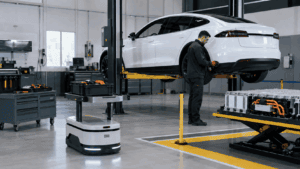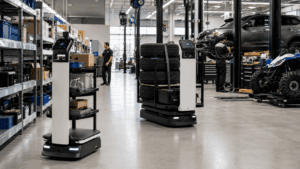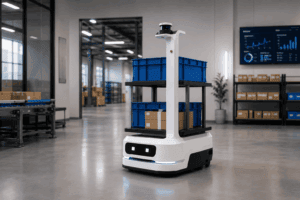
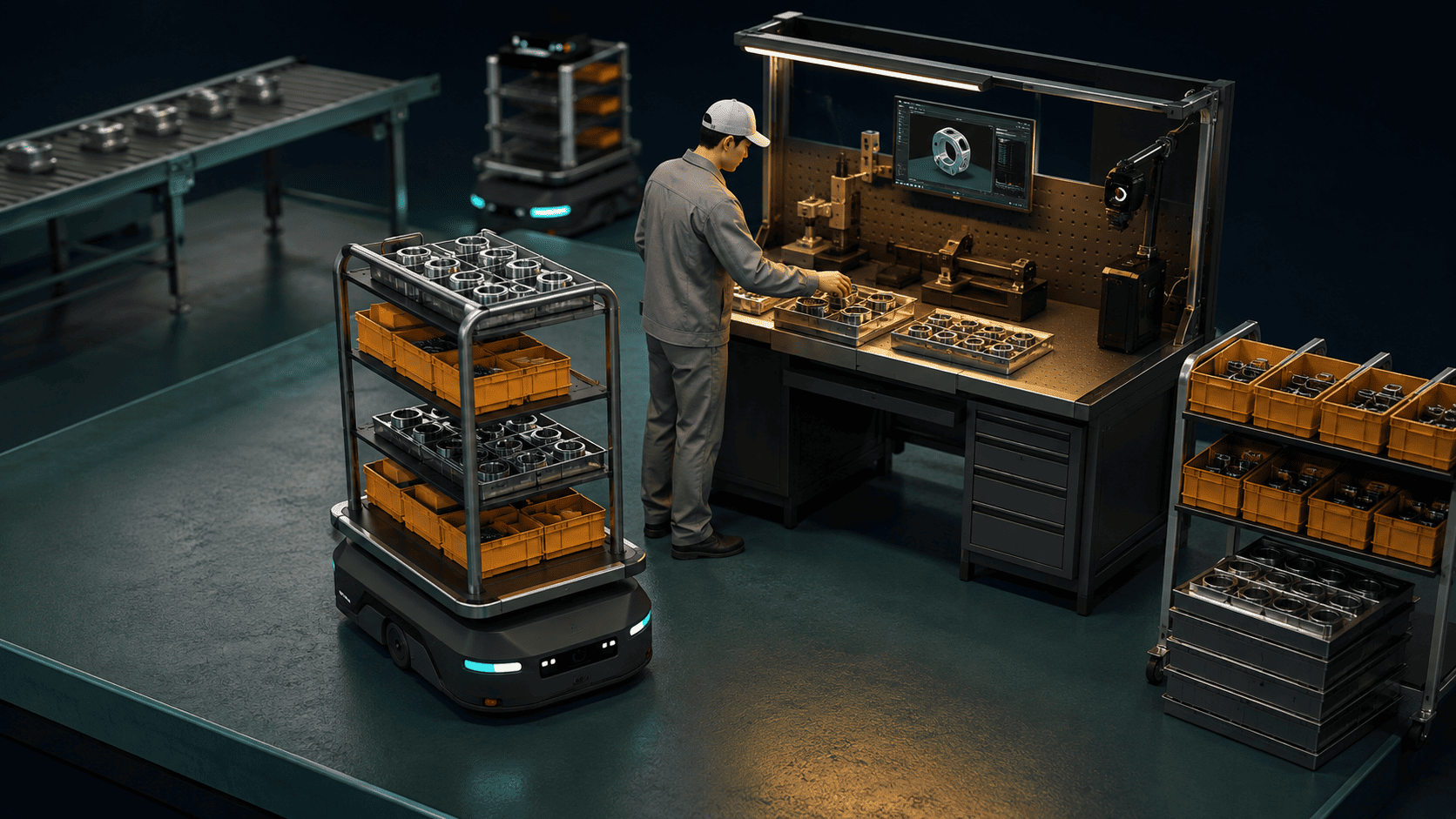
AMRs reduce repetitive material transport by moving parts, tools, carts, and supplies between the parts department, service bays, storage areas, and other work zones. In automotive service environments, this can reduce technician walking, manual cart movement, and delivery delays while allowing skilled employees to remain focused on repairs, inspections, diagnostics, and other higher-value work.
In a busy service department, small trips add up. A technician may walk to the parts counter, wait for a component, push a cart across the shop, or leave the bay to find supplies. Each trip takes time away from work that requires technical skill, judgment, and direct attention to the vehicle.
Why Repetitive Material Transport Reduces Shop Productivity
The problem is not a single trip; it is the cumulative effect of dozens or hundreds of trips across a shift. Repetitive movement can interrupt repair flow, extend job cycle time, increase waiting between departments, and reduce the amount of skilled work completed during paid labor hours.
Common examples include:
-
- Walking from a service bay to the parts counter for routine items
-
- Moving tires, batteries, brake components, tools, or shop supplies
-
- Returning warranty parts or used components to a designated area
-
- Replenishing consumables at workstations
-
- Pushing carts between storage, inspection, service, and shipping areas
How AMRs Improve Technician Labor Productivity
1. Reduce unnecessary walking
ShopProBot can move parts, tools, supplies, carts, and materials directly to technicians or workstations. This allows employees to remain focused on repairs, inspections, diagnostics, and other productive work.
2. Automate repetitive transport routes
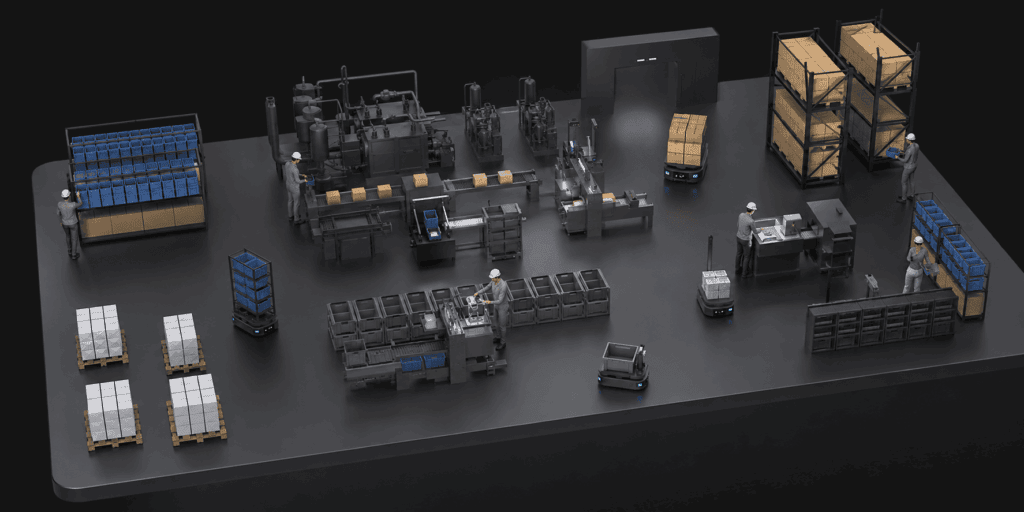
AMRs can repeatedly move materials between parts storage and service bays, warehouses and production areas, workstation and inspection areas, and shipping locations. The AMRs can navigate these locations and environments without requiring employees to manually complete every delivery. NIST identifies navigation, localization, and human-robot collaboration as important capabilities of mobile robots used in manufacturing.
3. Reduce pushing, pulling, and carrying
By moving carts, totes, parts, and heaving materials, ShopProBot reduces the amount of repetitive physical handling employees must perform. Furthermore, the JOY6 has a weight capacity of 661 lbs (approximately 300 kgs), which makes it great for heavy-duty transport. OSHA reveals that pushing, pulling, carrying, lifting, and repetitive movement as risk factors that can contribute to fatigue and musculoskeletal injuries.
4. Improve workflow consistency
AMRs can respond to digital delivery requests or follow scheduled routes, creating a more predictable flow of materials. A fleet-management system can assign destinations and coordinate multiple robots while each robot handles navigation and obstacle avoidance.
5. Keep skilled employees focused on skilled work
While the robot handles suitable transportation tasks, employees can continue work that requires technical ability, decision-making, dexterity, inspection, communication, and problem-solving.
6. Navigate changing environments
AMRs use sensors, mapping, localization, and path-planning software to operate where people, carts, vehicles, equipment, and other obstacles may move throughout the day. A properly configured AMR should detect obstacles, slow or stop when necessary, reroute when possible, and resume when the path is clear.
Automotive Service Tasks ShopProBot Can Support
The best applications are frequent, repeatable, point-to-point movements with clear pickup and delivery locations. Potential workflows include:
-
- Parts-counter deliveries to service bays
-
- Movement of tools and supplies between storage and workstations
-
- Tire, wheel, battery, or heavy-component transport where payload and attachment requirements are appropriate
-
- Warranty-part returns and used-component collection
-
- Consumable replenishment for commonly used shop materials
-
- Movement between production, inspection, packaging, and shipping areas
For heavier transport workflows, the ShopProBot JOY6 supports payloads up to 300 kg, approximately 661 lb. Actual use depends on the payload, attachment, route, floor conditions, aisle clearance, traffic, and facility assessment.
How to Measure ShopProBot Results
Before deployment, establish baseline measurements for employee walking, manual transport trips, material-handling time, and delivery delays. After deployment, collect the same measurements and compare the results.
| KPI | Suggested Measurement |
| Technician walking time | Minutes walked per technician per shift |
| Labor hours recovered | (Minutes saved × employees × shifts) ÷ 60 |
| Manual trips eliminated | Baseline trips minus post-deployment trips |
| Mission completion rate | Completed missions ÷ assigned missions × 100 |
| Average mission time | Total mission minutes ÷ completed missions |
| Intervention rate | Assisted missions ÷ total missions × 100 |
| Payload transported | Total weight or number of loads moved per shift |
| Robot availability | Available operating time ÷ scheduled time |
| Delivery delay | Average request-to-delivery time |
Establish a baseline before deployment
-
- Count routine parts, tool, and supply trips during representative shifts.
-
- Record approximate trip duration and waiting time.
-
- Identify the highest-frequency routes and busiest delivery periods.
-
- Document typical payload size, weight, and handling method.
-
- Review doors, ramps, floor conditions, aisle widths, traffic, and docking locations.
-
- Repeat the same measurements after deployment and compare the results.
Evaluating the Overall Impact
ShopProBot should be considered successful when it reduces unnecessary employee movement, completes transport missions reliably, requires minimal human assistance, and allows employees to spend more time on productive work instead of routine transport.
The operating data should also be used to improve routes, schedules, pickup locations, and delivery procedures. Frequent rerouting may indicate that a pathway is too congested. Repeated human intervention may reveal a problem with docking, localization, route design, or task programming. Reviewing the results regularly allows the AMR workflow to become more efficient and better adapted to the facility’s daily operations.
What AMRs Do—and Do Not—Replace
AMRs are most effective when they take over repetitive movement rather than technical judgment. Technicians remain responsible for diagnosis, repairs, inspection, communication, and decision-making. The robot handles suitable point-to-point transportation tasks so employees can spend more time on work that depends on human expertise.