AMR warehouse automation is reshaping how modern facilities move materials, manage returns, transport heavy loads, and connect workflows from receiving to shipping. Although autonomous mobile robots were once associated mainly with order picking, they now support a much wider range of warehouse operations
That view made sense a few years ago. Early AMR adoption often started with a clear and focused problem: helping teams pick faster, walk less, and reduce repetitive manual movement.
But warehouse automation has changed.
Today, AMRs are no longer limited to one task or one workflow. They have become flexible, multi-purpose automation systems that can support material movement across the entire facility, from inbound receiving to outbound shipping.
For warehouse operators, supply chain leaders, manufacturers, retailers, and third-party logistics teams, this shift is important. The right AMR solution can help improve throughput, reduce physical strain on workers, support changing order profiles, and make warehouse operations more adaptable.
AMRs Are No Longer Just for Each-Picking
Each-picking is still one of the most important warehouse automation use cases. It helps reduce unnecessary walking, improves order accuracy, and keeps associates focused on value-added work.
However, modern warehouse challenges go far beyond picking individual items.
Many facilities also need to move heavy loads, handle non-conveyable items, process returns, build mixed pallets, transport totes between zones, support dock-door workflows, and keep operations moving without adding fixed infrastructure.
That is where AMRs are becoming more valuable.
Instead of solving only one warehouse problem, AMRs can now support a wide range of workflows, including:
-
- Heavy-load material transport
-
- Returns sortation and reverse logistics
-
- Non-conveyable and oversized item movement
-
- Mixed each-and-case pallet picking
-
- Tote and case movement between pick zones
-
- Outbound parcel sortation
-
- Point-to-point transport
-
- Conveyor replacement or conveyor reduction
-
- Multi-floor and mezzanine workflows
-
- High-frequency, repetitive material movement
For many operations, the value of AMRs is no longer just about speed. It is about flexibility.
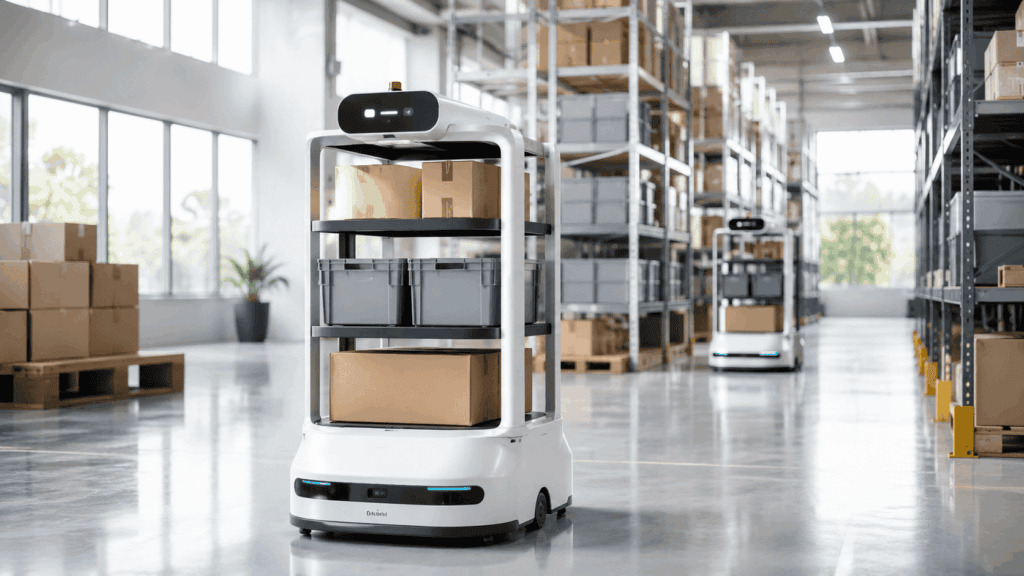
Moving Non-Conveyables and Heavy Loads More Safely
Every warehouse has items that are difficult to move.
Some products are too large, too heavy, too awkward, or too irregular for traditional conveyor systems. These non-conveyables often require extra labor, carts, forklifts, or manual handling. That can slow down the operation and increase physical strain on associates.
AMRs help solve this problem by creating a safer and more consistent way to move heavy or bulky items through the facility.
ShopProBot industrial AMRs such as JOY6 and JOY13 are designed for heavier material movement and can support workflows where items need to be picked, staged, transported, or delivered between zones. This makes them useful for operations handling industrial parts, large cartons, automotive components, bulky retail products, sporting goods, and other hard-to-move SKUs.
Instead of asking workers to repeatedly push carts or move oversized items manually, AMRs can help carry the load and keep the workflow moving.
A Smarter Way to Handle Returns and Reverse Logistics
Returns are a normal part of retail, e-commerce, and distribution operations. But inside the warehouse, returns can be one of the most disruptive workflows.
Returned items often need to be received, inspected, sorted, restocked, repaired, repackaged, recycled, or routed to a different area. This process can require much more labor than standard outbound fulfillment and can quickly create congestion if the facility is not designed for it.
AMRs can help bring more structure to reverse logistics.
By using autonomous transport and sortation workflows, facilities can move returned goods to the right processing area without relying as heavily on manual cart movement or fixed conveyor lines. AMRs can support tote movement, zone-to-zone delivery, restocking workflows, and flexible routing as return volume changes.
For operations where returns volume is unpredictable, this flexibility matters. A fixed conveyor can only do what it was built to do. An AMR fleet can be adjusted as the workflow changes.
Supporting Mixed Pallet Picking for Complex Fulfillment
Some of the most demanding warehouse workflows happen when speed and complexity meet.
Mixed pallet picking is a good example. These workflows may require case picking and each picking in the same operation. The goal is to build pallets that contain the right mix of products for a specific store, customer, route, or delivery destination.
This is common in industries such as grocery, retail distribution, healthcare, automotive, and high-volume fulfillment.
AMRs can support mixed pallet operations by moving totes, cases, and picked items between zones and destination points. With multi-drop-off workflows, robots can deliver items to multiple pallet locations and help reduce extra sortation steps.
This allows the warehouse to build more accurate route-ready pallets while keeping product movement organized.
For heavier workflows, larger AMRs can transport cases, totes, or bulkier items between pick zones and dock doors. The result is a mixed-mode operation that combines picking precision with better material flow.
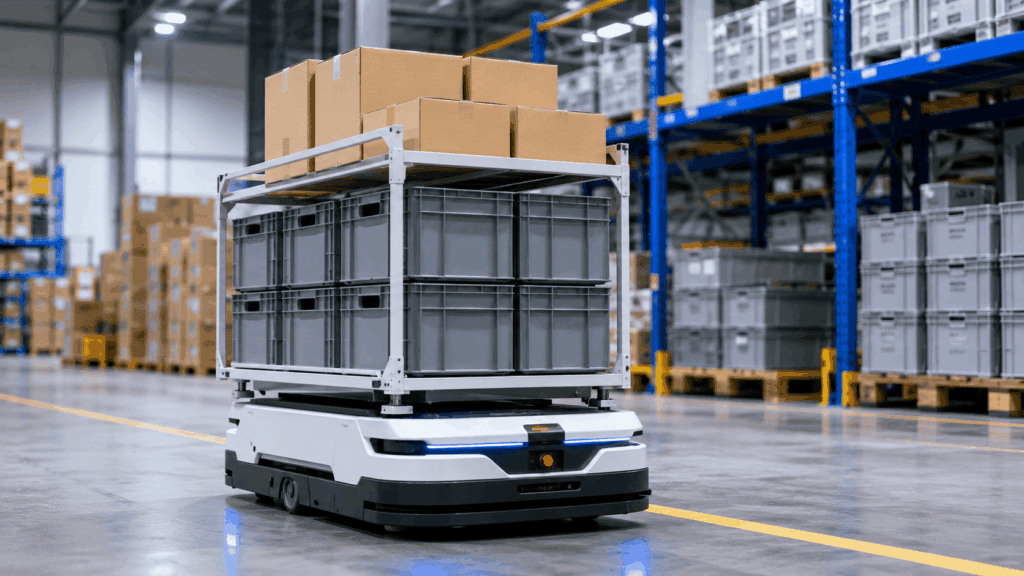
AMRs as a Flexible Alternative to Fixed Conveyors
Conveyors have been used in warehouses for decades, especially for high-volume sortation and outbound movement. They can be effective, but they also come with limitations.
Conveyor systems are expensive to install, difficult to move, and take up permanent floor space. Once a conveyor layout is built, the warehouse must often work around it.
That can be a problem when order profiles, product sizes, shipping methods, or facility layouts change.
AMRs offer a more flexible alternative.
Instead of locking a facility into one fixed path, AMRs can move materials point-to-point. They can travel between zones, work around layout changes, support temporary workflows, and reach areas where conveyors may not make sense.
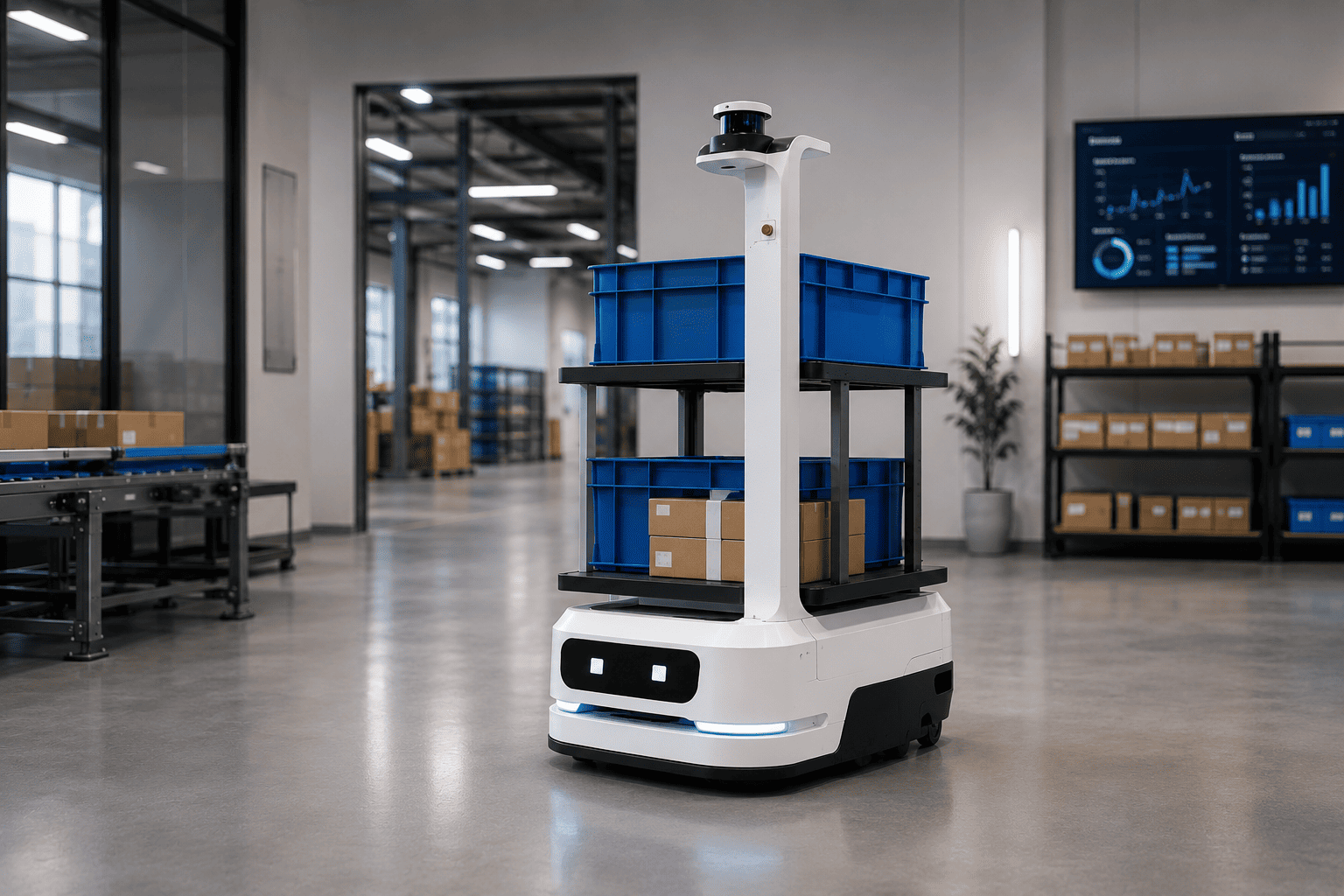
For example, a compact AMR such as JOY3 can support light-to-medium material movement in factories, warehouses, and intralogistics routes. Larger robots such as JOY6, JOY13, and JOY13U can support heavier payloads, rack movement, and larger material transport workflows.
Together, different AMR models can help create a more flexible material handling system without requiring a full conveyor buildout.
How AMR Warehouse Automation Improves Material Flow
The biggest opportunity for AMRs is not just one task. It is the ability to connect different parts of the warehouse.
A warehouse does not operate in isolated steps. Receiving affects storage. Storage affects picking. Picking affects packing. Packing affects shipping. Returns affect inventory. Every delay creates a ripple effect.
AMRs can help connect these workflows by moving materials at the right time to the right place.
Common AMR-supported workflows include:
-
- Receiving to storage
-
- Storage to production line
-
- Pick zone to pack station
-
- Pack station to sortation
-
- Sortation to dock door
-
- Returns area to inspection
-
- Inspection to restocking
-
- Rack movement to picking station
-
- Cross-floor or mezzanine transport
This is why AMRs are becoming important for modern warehouse automation. They are not only robots that move products. They are tools that help improve the flow of work.
Why Flexibility Matters in an Uncertain Supply Chain
Warehouse operations are under constant pressure.
Labor availability changes. Order volume changes. Customer expectations change. Product mix changes. Space requirements change. Seasonal demand changes. New sales channels create new fulfillment needs.
A fixed automation system can be powerful, but it may not always adapt quickly.
AMRs give facilities another option. They allow businesses to start with a focused workflow, prove value, and expand over time. A company may begin with point-to-point material movement, then add picking support, rack transport, returns routing, or dock-door delivery as the operation grows.
This makes AMRs a practical investment for businesses that need automation but also need room to adapt.
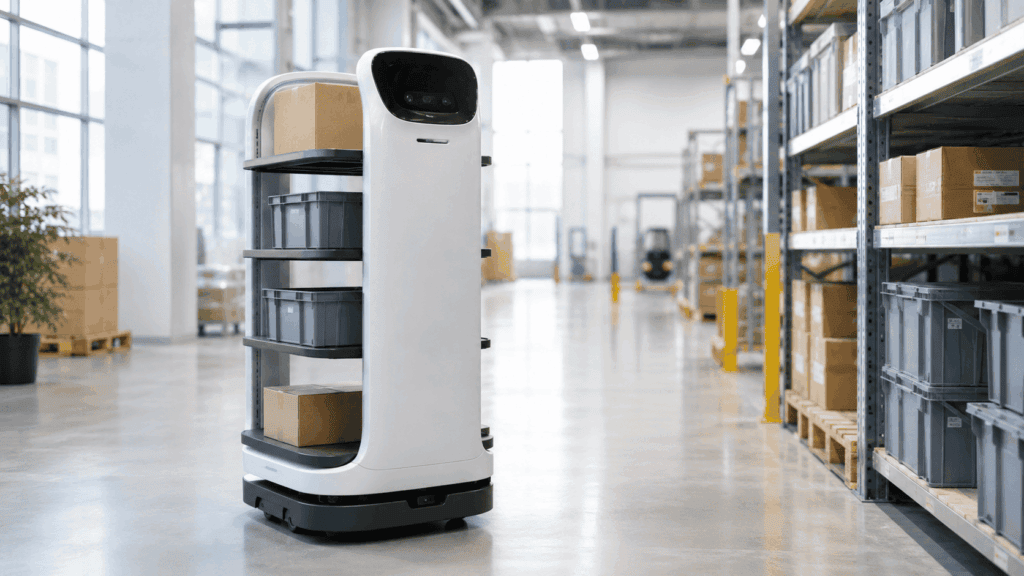
Choosing the Right AMR Workflow
The best AMR solution starts with the workflow, not the robot.
Before choosing a model, warehouse leaders should ask:
-
- What materials need to be moved?
-
- How heavy or bulky are the loads?
-
- How often does the movement happen?
-
- Where does the workflow begin and end?
-
- Are aisles wide enough for safe travel?
-
- Are there elevators, doors, ramps, or tight turns?
-
- Is the goal to reduce walking, increase throughput, improve safety, or replace fixed transport?
-
- Does the operation need one robot or a coordinated fleet?
-
- Will the workflow change during peak seasons?
Answering these questions helps determine whether the operation needs a compact AMR, a heavy-duty AMR, an underride AMR, or a multi-robot fleet.
ShopProBot Helps Businesses Move Beyond Manual Material Handling
ShopProBot helps businesses evaluate, deploy, and support commercial robotics for industrial delivery, material handling, and facility operations.
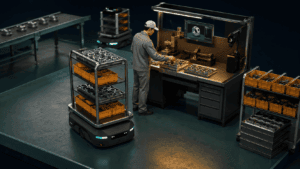
For warehouse and manufacturing teams, ShopProBot AMRs can support a wide range of workflows, including light-load transport, heavy-load movement, rack movement, tote delivery, point-to-point logistics, and multi-zone material flow.
The goal is not to replace every part of the warehouse overnight.
The goal is to identify the right workflow, automate the right movement, and build a more flexible operation step by step.
AMRs Are Becoming a Core Part of Warehouse Automation
AMRs started by solving clear warehouse problems such as each-picking and repetitive walking. But the technology has matured.
Today, AMRs can support non-conveyables, heavy loads, mixed pallet workflows, returns, outbound movement, conveyor alternatives, and full-facility material flow.
For businesses looking to modernize warehouse operations, AMRs offer something especially valuable: flexibility.
They help operations move faster today while staying adaptable for tomorrow.
If your warehouse, factory, or distribution center is exploring automation, the best first step is to review your current material movement workflows and identify where people are spending the most time walking, pushing, waiting, or manually transporting goods.
That is often where an AMR can make the biggest difference.
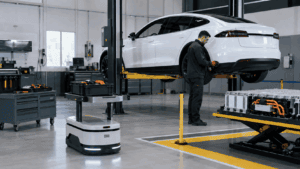
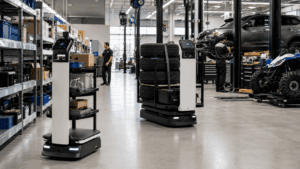
For automotive dealerships, service centers, collision centers, and parts departments, the same AMR material-handling idea can also apply to parts-counter delivery, tire movement, battery transport, warranty returns, and service-bay support. For a more automotive-focused example, read K&L Supply’s guide on creating a better automotive material-handling workflow.
Ready to Explore How AMRs Can Help With Returns and Reverse Logistics?
ShopProBot helps businesses find practical, scalable robot solutions for real-world operations. Whether you need a cleaning for your shop floor, a high-capacity robot for your warehouse, or a specialized Service Robot for customer delivery, we have the technology to fit your budget and facility layout.
Talk to a ShopProBot AMR Specialist today to request a custom quote, view product specifications, or schedule a virtual live demo.